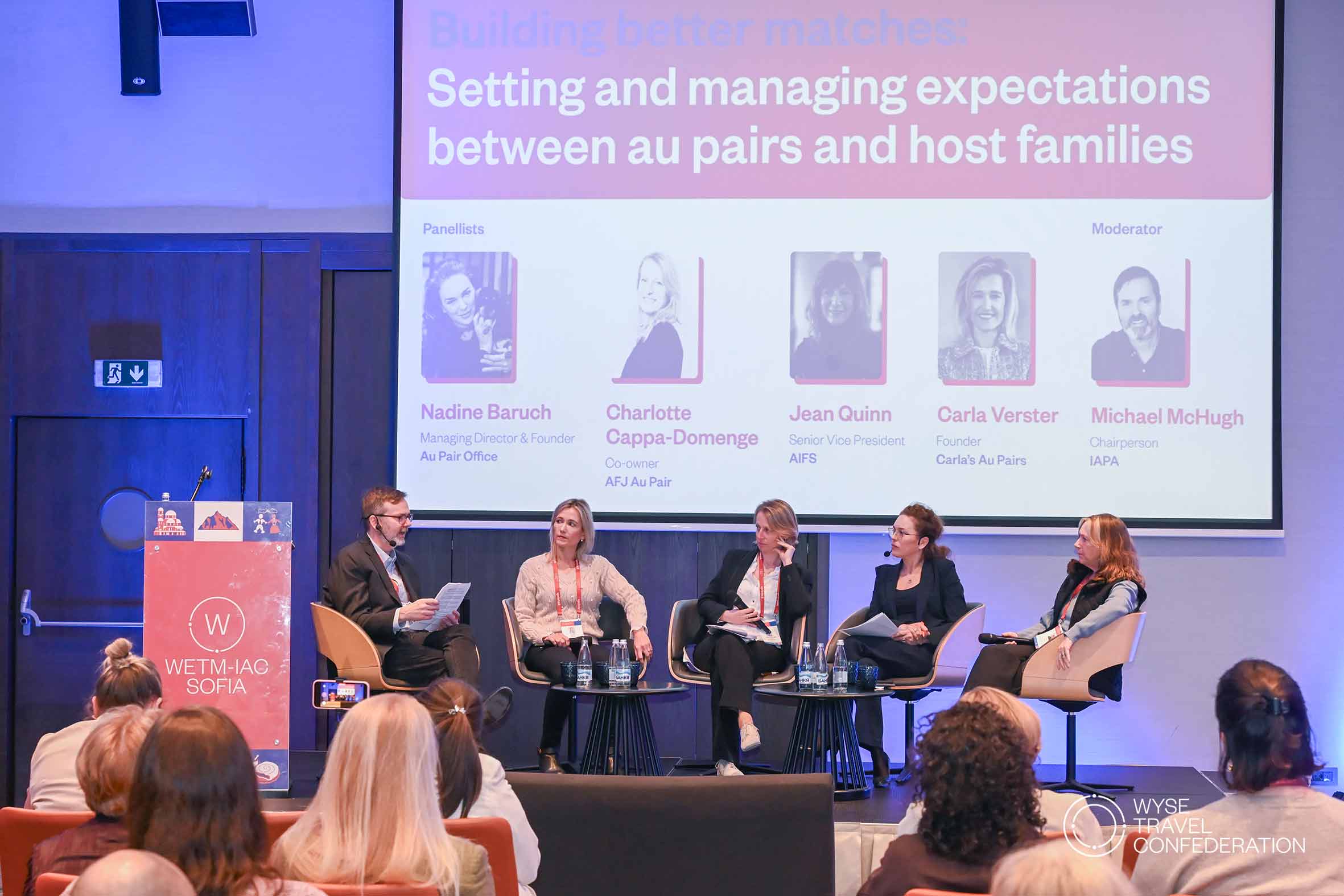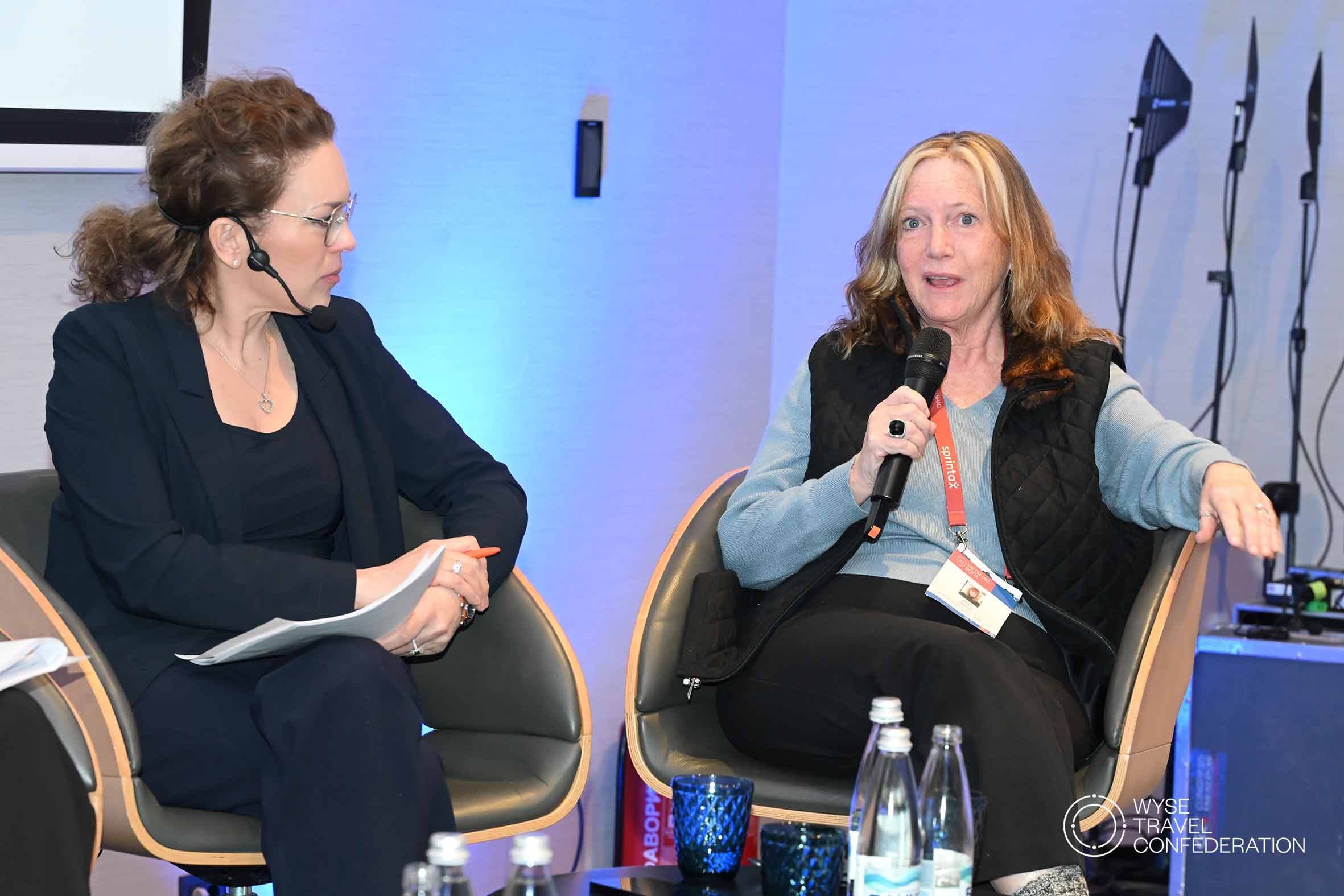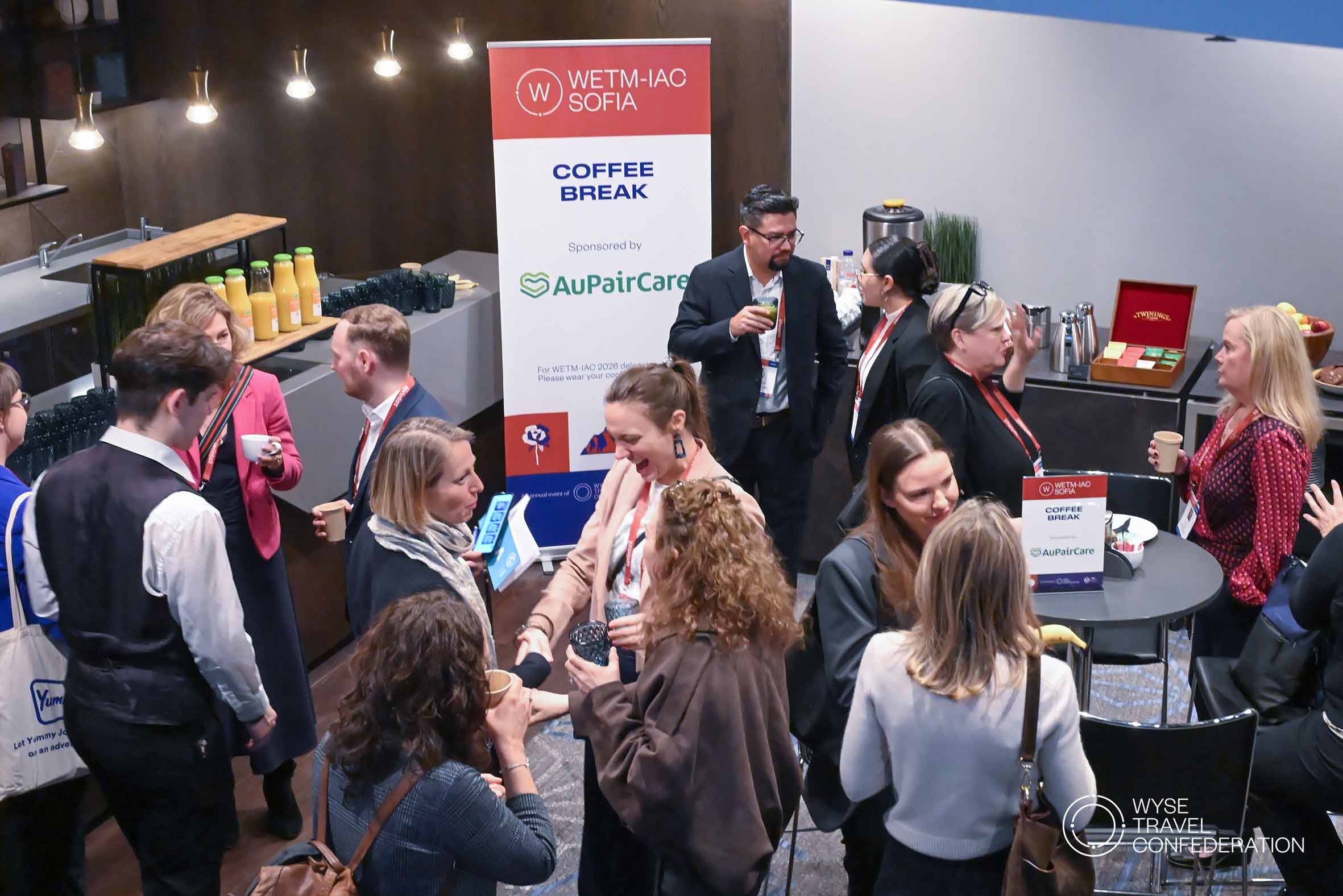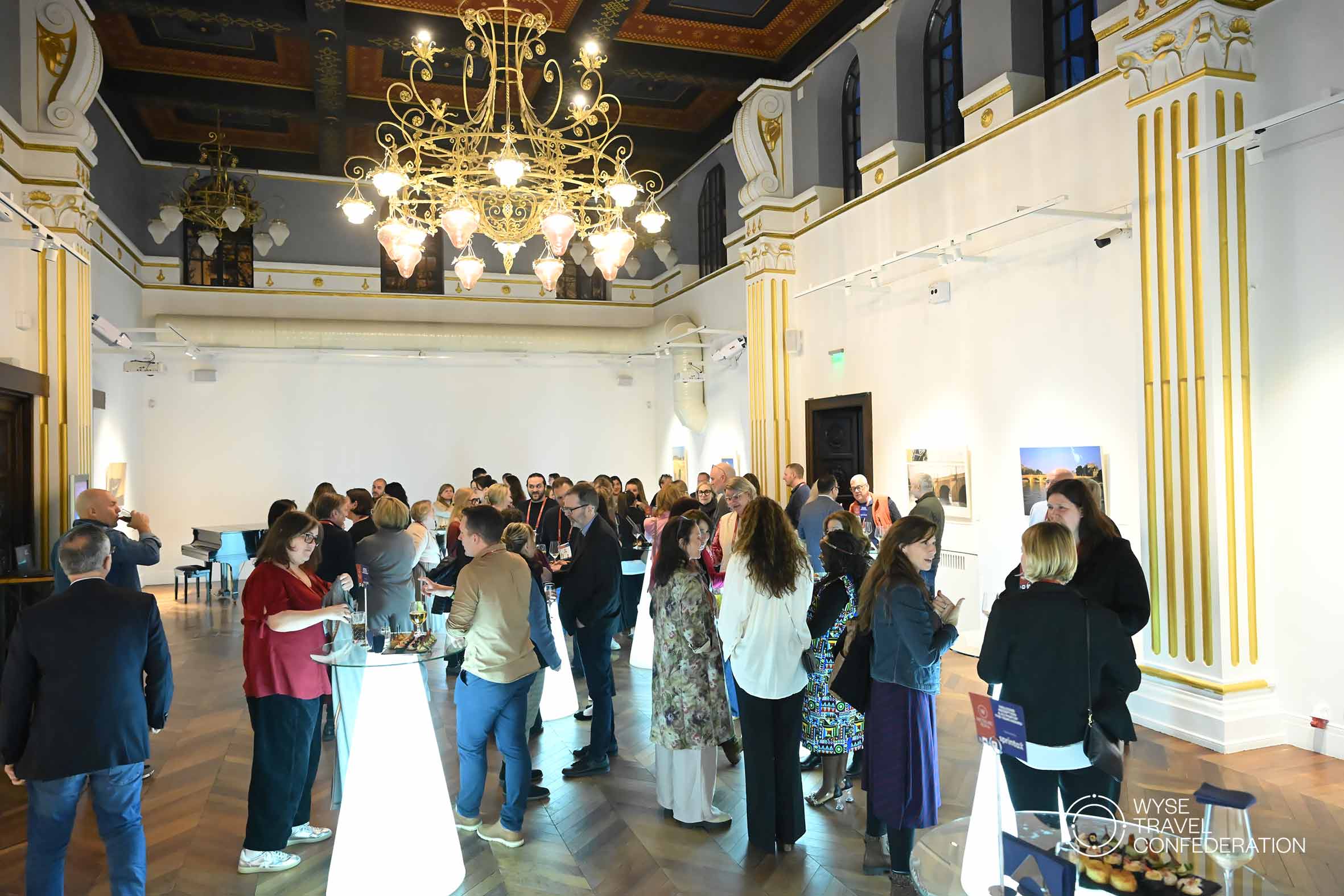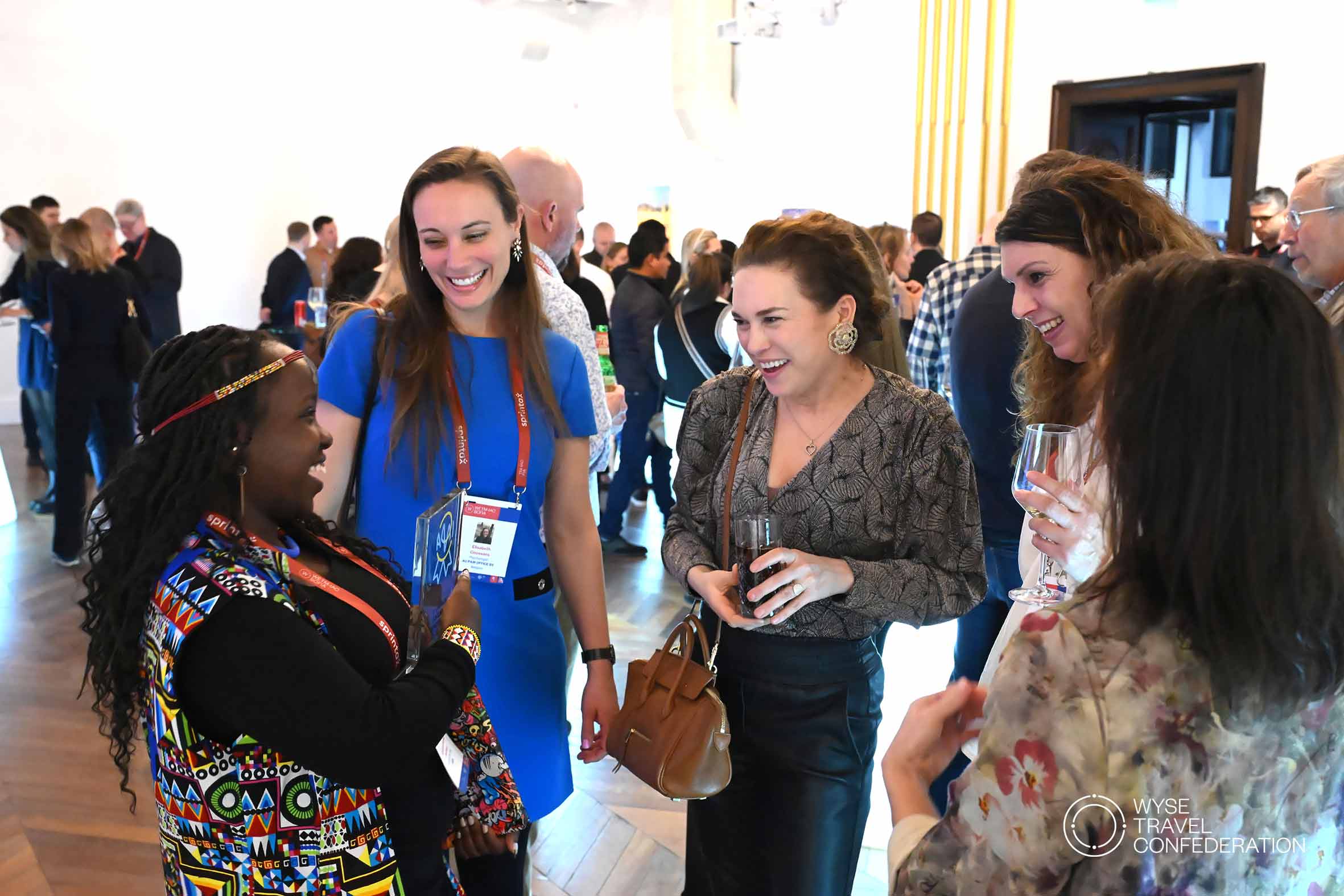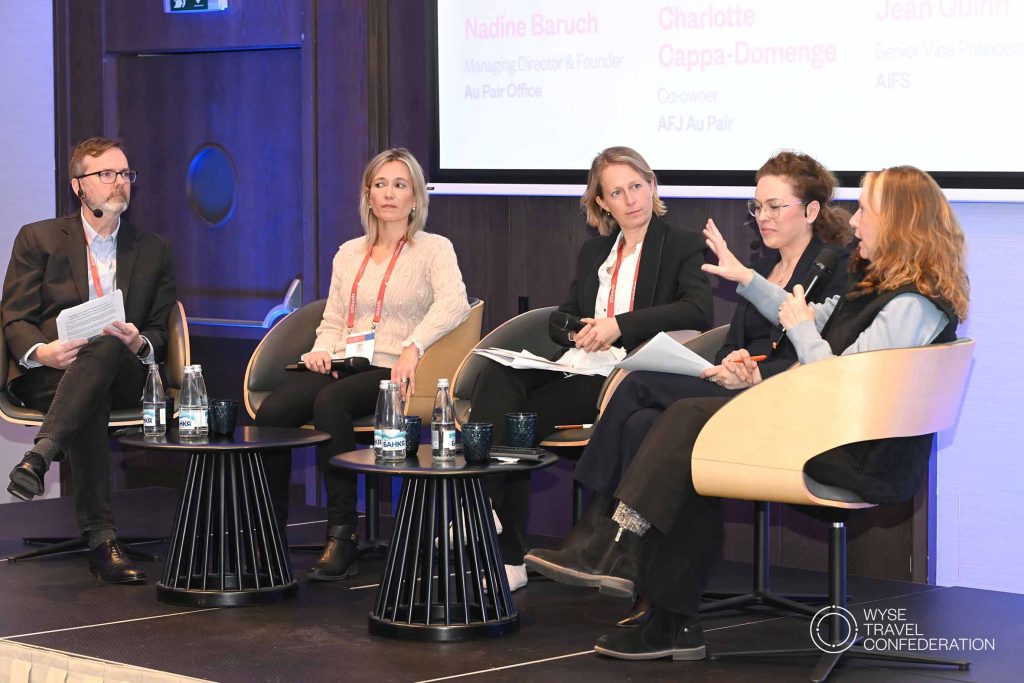
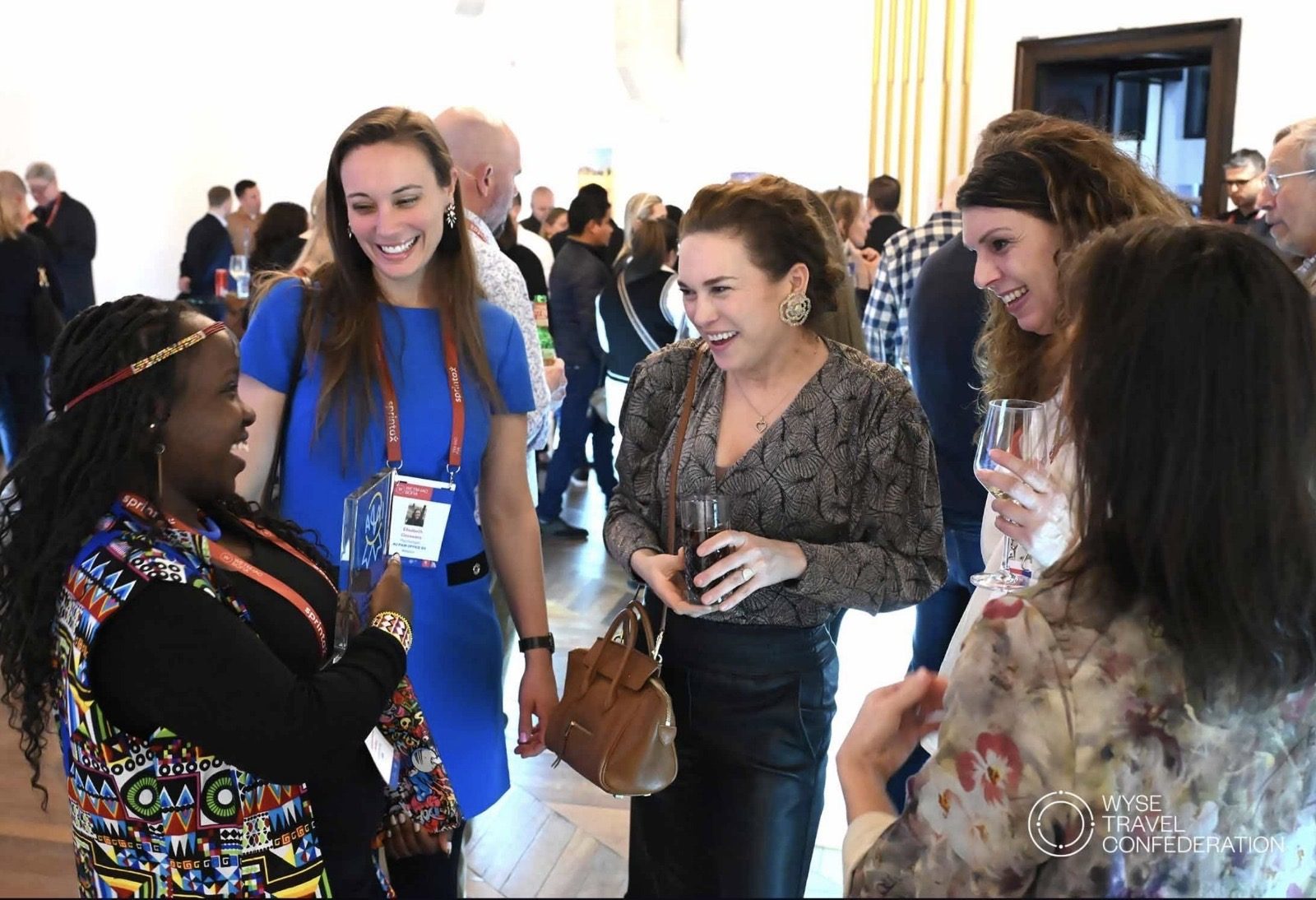
From 18 to 20 March 2026, Au Pair Office participated in the international WETM–IAC Conference in Sofia. This conference brings together leading agencies and experts from across the global au pair sector. It is a space where real challenges are discussed openly, and where the future of industry is shaped.
For us, one message stood out clearly:
Strong au pair matches are not created by chance.
They are built long before arrival.
Building Better Matches: Managing Expectations Between Au Pairs and Host Families
During the conference, we had the privilege of leading a panel focused on one of the most critical aspects of the au pair program: expectation management.
The core issue: misaligned expectations
In our daily work as an au pair agency in Belgium, most challenges do not arise from bad intentions.
They arise from unclear expectations, insufficient preparation and a lack of structured communication.
In reality, most mismatches begin before the au pair even arrives.
Rethinking screening: beyond profiles
At Au Pair Office, we go beyond standard profile-based screening.
Our current self-match approach already includes in-depth interviews, follow-up questioning and consistency checks, allowing us to better understand the person behind the profile.
At the same time, we are actively developing a more advanced screening approach that moves beyond traditional, conversation-based methods, as well as the standard screening formats and personality tests commonly used within the industry. This development places a stronger focus on behavioral observation, deeper consistency analysis and emotional readiness.
A strong au pair is not defined by experience alone, but by emotional maturity, adaptability, resilience, honesty and realistic expectations, alongside additional factors that we continue to identify through ongoing experience and research.
Our in-house psychologist plays a key role in this process, supporting the identification of patterns and helping assess emotional readiness at an early stage.
At the same time, expectations today are no longer shaped by agencies alone. They are increasingly influenced by social media, peer experiences, online platforms, reviews and AI.
As a result, candidates often arrive with a fixed narrative and seek confirmation rather than guidance.
Our role is to continuously recalibrate expectations and align them with reality.
 A generation that avoids difficult conversations
One recurring theme across countries is the difficulty many young au pairs have in addressing challenges early on.
Conversations are often postponed, discomfort is avoided, and small issues are left to grow into larger problems.
At the same time, host families often manage demanding schedules, making clarity and structured communication all the more important.
This is why we actively guide communication before arrival, during the first weeks and throughout the entire placement.
Families today: higher expectations, lower tolerance
We notice that families increasingly rely on the au pair program as a structured form of childcare support. However, it remains first and foremost a cultural exchange program.
When this distinction is not clearly understood, it can lead to higher expectations and lower tolerance when things do not go as planned.
Respectful and well-aligned communication from the very beginning and throughout the entire stay is more important than ever.
Clear agreements and realistic expectations are therefore essential from the very beginning, for both families and au pairs.
The role of an agency: beyond administration
A strong agency does more than manage paperwork.
It aligns expectations, structures, communication, supports when challenges arise and remains involved after arrival.
A successful match is not a one-time decision. It is an ongoing process.
Our approach at Au Pair Office
At Au Pair Office, we focus on building strong and sustainable placements through deep and structured screening, psychological insight, honest and transparent positioning, and continuous guidance before and during the stay.
We also recognize that not every family and not every candidate is the right fit. Open and consistent communication with each other and with the agency is an essential part of any successful placement.
Clarity at the beginning prevents problems later.
Watch our panel
To give you a deeper insight into the discussion, you can watch a short fragment of our panel at the WETM–IAC Conference below.